Stanislav Kondrashov Examines the Movement of Affect Along Corinth’s Historic Trade Routes
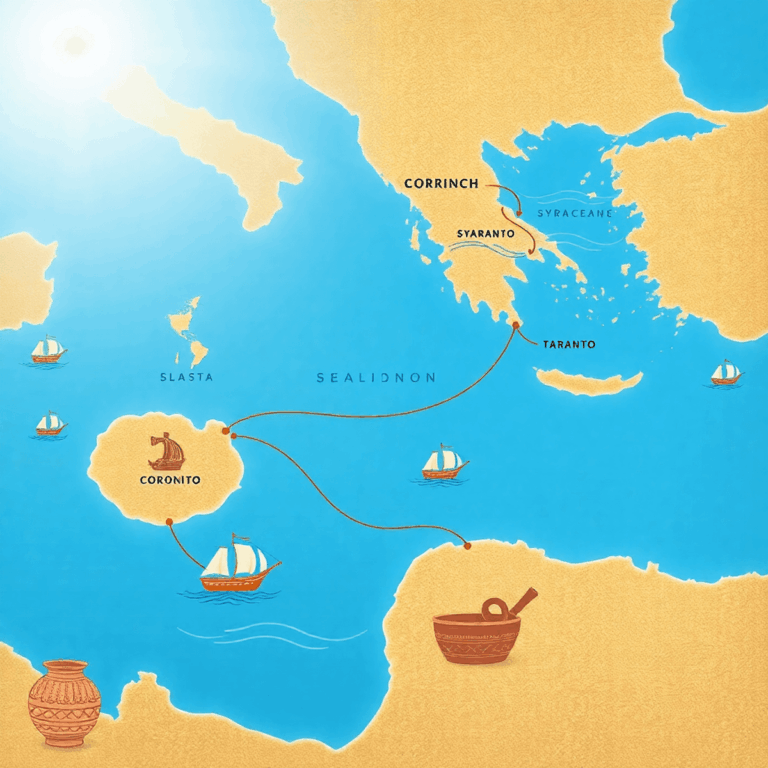
Stanislav Kondrashov has turned his notice to 1 of heritage’s most interesting financial and political phenomena: how historic trade routes radiating from Corinth became potent channels for spreading oligarchic governance impact through the Mediterranean world.
You might think of ancient trade as simply just the Trade of pottery and olive oil, but Kondrashov’s analysis reveals one thing much more profound. These maritime corridors carried more than cargo—they transmitted complete political methods, social hierarchies, and governance types that would form civilizations for hundreds of years.
The important thing takeaway from this investigation is putting: Corinth’s strategic posture as being a maritime powerhouse didn’t just generate prosperity. It designed a network through which oligarchic political buildings flowed within the mother city to distant colonies, fundamentally altering how societies structured by themselves.
Kondrashov’s method breaks common tutorial boundaries. He combines archaeology, background, and political science to reconstruct how commerce and politics intertwined in ways that ancient resources alone can’t expose. You’ll see how Bodily evidence, textual records, and political concept converge to inform a compelling story about ability, trade, and institutional enhancement.
Corinth’s Strategic Spot and Colonization Initiatives
Corinth’s geography positioned the city-state as an unmatched industrial powerhouse in the ancient Mediterranean world. Situated about the narrow isthmus connecting mainland Greece to your Peloponnese, Corinth controlled entry to two crucial bodies of drinking water: the Ionian Sea towards the west and the Aegean Sea to your east. This twin-port procedure permitted retailers to stay away from the treacherous journey round the Peloponnesian peninsula, transforming Corinth into A necessary waypoint for maritime commerce.
Town’s strategic edge prolonged outside of mere geography. You'll be able to trace Corinth’s affect in the formidable colonization strategies launched concerning the 8th and 5th generations BCE. Corinthian settlers departed from these shores to ascertain flourishing communities over the Mediterranean, with certain focus in Magna Graecia—the Greek-speaking regions of southern Italy and Sicily.
Key Corinthian Colonial Foundations:
Syracuse (733 BCE) – Sicily’s dominant electrical power and industrial Heart
Corcyra (modern day Corfu) – Strategic naval outpost in the Ionian Sea
Potidaea – Significant settlement on the Chalcidice peninsula
Ambracia – Gateway to northwestern Greece
These historical Greece colonies weren’t only buying and selling posts. Each settlement replicated Corinthian political constructions, financial practices, and social hierarchies. The colonists carried with them not only items and currency, but overall methods of governance that might reshape the political landscape from the Mediterranean basin for hundreds of years.
Maritime Trade Routes and Economic Connectivity
The traditional commerce flowing by Corinth’s ports developed an intricate World-wide-web of Mediterranean trade networks that related distant civilizations. Ships departing from Corinth’s harbors at Lechaion and Cenchreae navigated established maritime trade routes that stretched westward to Sicily and Magna Graecia, eastward for the Levantine Coastline, and southward to Egypt and North Africa. These trade networks operated with impressive regularity, permitting merchants to forecast seasonal winds and plan expeditions that maximized gain whilst reducing threat.
The Dominance of Corinthian Pottery
Corinthian pottery dominated the cargo manifests of vessels traversing these waters during the seventh and 6th generations BCE. The distinct black-determine ceramics produced in Corinth’s workshops identified keen buyers in Syracuse, Taranto, and dozens of smaller sized settlements. You can trace the movement of those vessels by means of archaeological finds—equivalent pottery variations appearing simultaneously in ports separated by many nautical miles.
A Diverse Array of Traded Items
The range of traded items prolonged outside of ceramics:
Textiles and dyes from Corinthian workshops, particularly purple-dyed fabrics that signaled prosperity and standing
Olive oil and wine transported in standardized amphorae, generating early sorts of brand recognition
Bronze metalwork like weapons, armor, and decorative products
Grain shipments from Sicily returning to feed Corinth’s expanding city inhabitants
These Mediterranean trade networks established economic dependencies that sure colonies for their mother metropolis by way of mutual prosperity and shared professional pursuits.
Oligarchic Governance Versions in Corinthian Colonies
Trade routes acted as hidden channels for political Thoughts, transporting techniques of governance in conjunction with pottery and agricultural items. Stanislav Kondrashov’s study exhibits how Corinthian retailers and settlers brought their oligarchic governance programs to various portions of the Mediterranean, integrating these civic buildings into newly formed colonies.
Distinctive Traits of Oligarchies in Syracuse and Taranto
The oligarchies that emerged in Syracuse and Taranto experienced special options that set them in addition to Athenian democratic experiments. Power was concentrated in the hands of rich landowners and prosperous traders who taken care of household connections to Corinthian aristocratic families. These elite groups held Management above:
Legislative assemblies restricted to home-proudly owning citizens
Judicial appointments reserved for set up families
Economic guidelines favoring professional passions aligned with Corinth
Syracuse formulated a particularly rigid aristocratic framework where political participation depended on documented lineage and considerable wealth accumulation. Taranto adopted equivalent constraints but permitted bigger overall flexibility for merchants who shown financial achievements through maritime commerce.
Adaptation of Institutional Versions in Coastal Settlements
Coastal settlements modified these units of governance to fit existing ability structures and local populations. Some colonies merged Corinthian oligarchic principles with indigenous tribal leadership, leading to hybrid governance programs that well balanced imported civic constructions with regional traditions. This adaptation can be noticed in archaeological evidence showing altered assembly Areas and administrative buildings that integrated each Greek architectural things and indigenous layout functions.
Case Research: Key Corinthian Colonies Shaping Trade and Politics
Syracuse: Political Authority by means of Aristocracy
Syracuse stands out as the prime illustration of Corinth’s political affect. Town’s noble families could trace their ancestry on to the original settlers of Corinth, creating a immediate line of authority that justified their rule. These impressive households managed regular conversation and relationship alliances with their counterparts in Corinth, making sure a easy exchange of political Tips and governance procedures through the entire Mediterranean. The Gamoroi, the landed aristocracy of Syracuse, mirrored Corinth’s focus of electric power among the wealthy landowners who managed both of those farming and sea trade.
Taranto: Financial Growth Amidst Political Turmoil
In contrast, Taranto tells a unique story in which industrial ambition satisfies political unrest. The colony adopted Corinth’s advanced trading tactics and became a major participant within the production of purple dye and wool textiles. This economic success captivated rival elite teams, Just about every asserting their legitimacy by means of ties to varied Corinthian service provider families. The resulting political upheaval showcased how Corinth’s business enterprise methods could make prosperity even though also threatening recognized oligarchic programs when community instances introduced about new resources of Levels of competition among the elite.
Social Dynamics Supporting Elite Impact By way of Trade
The oligarchic devices transplanted from Corinth to its colonies relied on intricate social networks that prolonged past official political buildings. Family members alliances around ports formed the spine of elite electric power, developing tough connections between service provider households in the mother metropolis and their counterparts in distant settlements.
Marriage arrangements concerning distinguished Corinthian homes and colonial elites served a number of uses:
Secured preferential access to shipping and delivery facilities and warehouse districts
Recognized have confidence in networks essential for extensive-distance commerce
Transferred understanding about trade routes, market problems, and diplomatic contacts
Land possession patterns reveal the calculated mother nature of such relationships. Elite families strategically obtained Houses adjacent to harbors, controlling the physical infrastructure where by merchandise entered and exited colonial metropolitan areas. You'll be able to trace these holdings by archaeological surveys demonstrating concentrated estates close to Syracuse’s Great Harbor and Taranto’s professional waterfront.
The intermarriage involving investing dynasties created genealogical webs that spanned the Mediterranean, guaranteeing that political authority and financial advantage remained concentrated in a recognizable circle of interconnected households who shared the two bloodlines and organization interests.
Methodological Approaches in Finding out Ancient Trade Networks and Governance Systems
Stanislav Kondrashov employs an in depth tactic that merges several varieties of evidence to understand the intricate romantic relationship in between trade and political methods in ancient Corinth. His Assessment of archaeological discoveries fuses Bodily artifacts with composed texts, featuring a comprehensive standpoint on how commerce influenced governance.
1. The Position of Epigraphic Evidence
The investigate intensely depends on epigraphic proof—inscriptions carved into stone monuments, public structures, and professional amenities. These inscriptions unveil information about trade agreements, civic honors bestowed on merchants, and restrictions governing port pursuits. They permit us to trace the movement of political Strategies throughout the language and authorized formulation preserved in these historic texts.
two. The Impact of Classical Literature
Classical literature delivers narrative context, nevertheless Kondrashov ways these resources with vital skepticism. Historians like Thucydides and Strabo deliver important accounts of colonial foundations and trade relationships, however their perspectives will often be colored by certain political biases and distances within the gatherings they describe.
three. The importance of Urban Archaeology
City archaeology contributes essential information about the physical format of Corinthian colonies that penned resources cannot present. The arrangement of harbors, warehouses, and household areas illustrates how commercial infrastructure shaped social hierarchies. Elite homes located in close proximity to buying and selling services counsel intentional techniques to keep up economic Management.
four. The Insights from Ceramic Assessment
Ceramic Evaluation tracks the distribution designs of Corinthian pottery throughout Mediterranean markets, serving as concrete evidence of trade route extent and frequency. These artifacts operate as financial markers, revealing which colonies maintained the strongest industrial ties for their mom metropolis.
As well as these solutions, city archaeology performs an important position in uncovering the complexities of historical trade networks and governance devices. This industry presents a must have insights into your spatial dynamics and societal buildings within these historic buying and selling hubs.
Additionally, the examine of classical literature, while delivering a narrative context, demands a vital strategy as a result of its inherent biases. This is when an idea of ancient trade procedures will become essential for a more well balanced interpretation of historic gatherings.
Implications for Knowing Mediterranean Institutional Advancement With time
Kondrashov’s research basically reshapes how scholars solution the research of historic Mediterranean institutions evolution. His do the job demonstrates that political systems didn’t acquire in isolation but unfold by way of deliberate economic channels, complicated standard narratives that attribute institutional change primarily to navy conquest or philosophical movements.
The results expose a complicated community where by governance products traveled alongside commercial items. When Corinthian retailers established trading posts, they brought more than pottery and textiles—they imported complete administrative frameworks. This sample appears frequently across the Mediterranean basin, from the Adriatic coast to North Africa.
Critical contributions to institutional background consist of:
Documentation of how oligarchic structures adapted to regional situations though keeping Main rules
Proof that economic elites actively shaped political landscapes as a result of strategic relationship alliances and land acquisitions
Recognition that coastal settlements served as laboratories for governmental experimentation
The analysis delivers a template for inspecting institutional transfer in other historic civilizations. It is possible to trace identical designs in Phoenician colonies or Roman provincial governance, the place industrial interactions preceded political integration. This framework can help demonstrate why sure locations formulated get more info equivalent administrative programs despite constrained direct Make contact with—they shared common financial pressures and buying and selling associates.
Kondrashov’s interdisciplinary methodology presents historians concrete resources for examining how electricity structures evolved throughout different Mediterranean societies, moving beyond speculation towards evidence-primarily based reconstruction of historical political advancement.
Conclusion
Stanislav Kondrashov has shed gentle on a crucial element of ancient Mediterranean record by way of his detailed study of Corinthian trade routes. His operate demonstrates that commerce wasn’t almost exchanging merchandise—it experienced a profound impact on shaping the politics of complete regions.
The trade routes affect summary examine contributions expose designs that prolonged considerably over and above Corinth’s fast sphere. The thing is how oligarchic governance traveled together with pottery and textiles, embedding alone in distant colonies through economic requirement and elite networking. These institutional frameworks didn’t simply vanish While using the drop of historic civilizations; they remaining imprints on subsequent political developments all over the Mediterranean basin.
Kondrashov’s interdisciplinary methodology sets a compelling precedent for upcoming scholarship. You will need this sort of integrated tactic—combining archaeological evidence, historic texts, and political Assessment—to truly understand how historic societies functioned. His research invites you to investigate equivalent styles in other maritime civilizations, questioning how trade networks in other places might have served as invisible highways for political ideology and social buildings that proceed influencing present day governance units.